
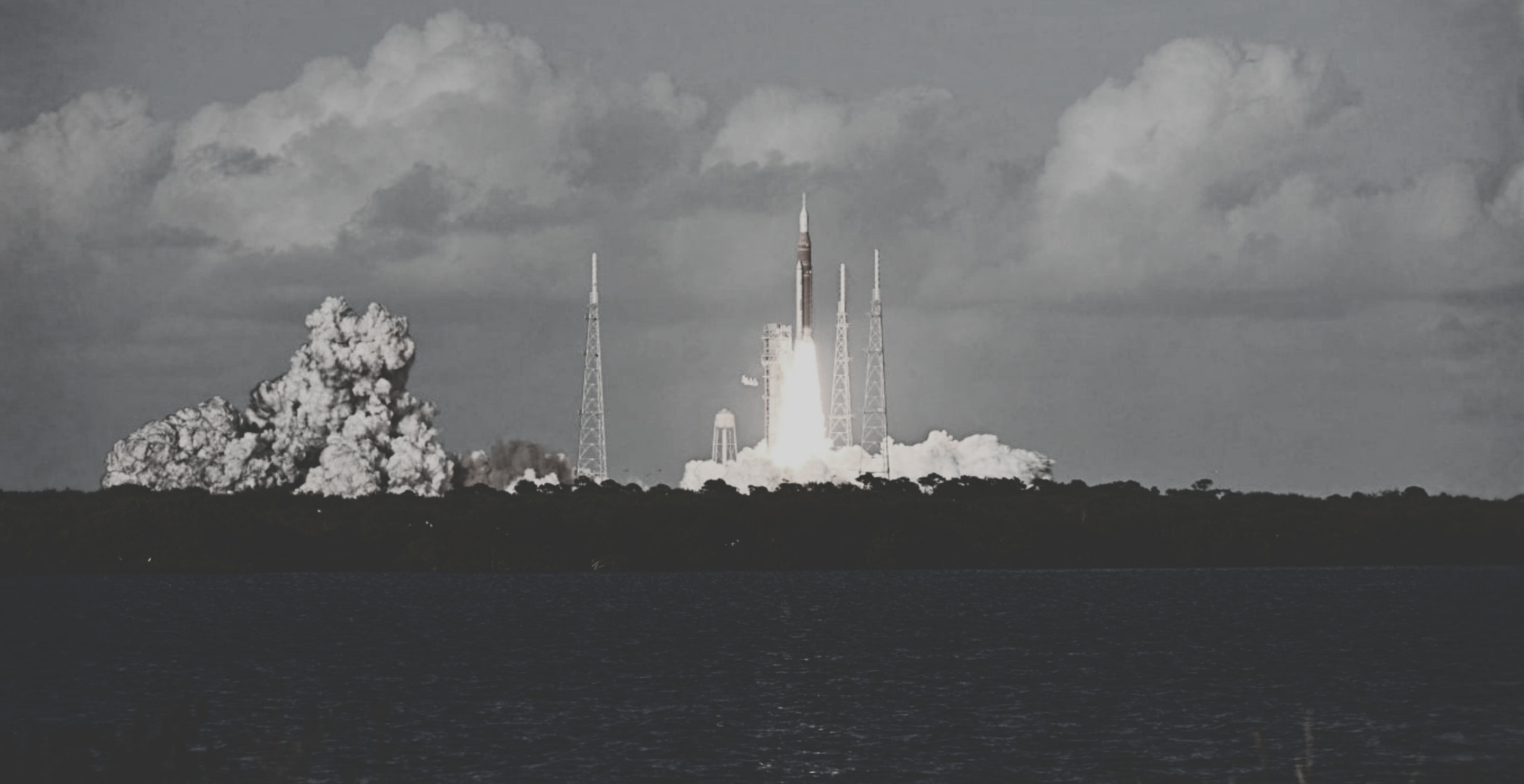
This week, NASA’s Artemis II launched successfully, sending four astronauts on a journey around the moon for the first time since Apollo 17 in 1972. The technical complexity of the undertaking is staggering, but behind the engineering and the hardware is something equally demanding: the organizational precision required to keep thousands of people, across dozens of teams and disciplines, operating as a single coherent system. One assumption that does not hold. One decision made without the right people in the loop. One team working from a version of the plan that has already changed. Any of those gaps, at the wrong moment, can cascade.
Most organizations will never prepare for spaceflight, but the alignment challenge Artemis II represents is not unique to NASA. It is the same challenge facing any organization that operates at pace, with multiple interdependent teams, in an environment where priorities shift and decisions compound. The stakes differ. The structure of the problem does not.
Misalignment Is a Structural Risk, Not a Cultural One
Leadership conversations about alignment tend to default to culture. If people are aligned, the thinking goes, they share the same values, the same commitment, the same direction. That framing is not wrong, but it is insufficient. Culture alignment does not prevent operational gaps. A team can be fully committed to the organization’s mission and still be operating on different assumptions about what the current priority actually is.
The Artemis program illustrates why structural alignment matters more than sentiment. NASA does not rely on shared values to keep mission critical teams coordinated. It builds coordination into the operating system through protocols, checkpoints, documented decisions, and shared situational awareness that is maintained continuously, not just at the start of a project. Every team knows what the others are doing, not because of goodwill but because the system requires it.
In organizational teams, the equivalent is a consistent operating rhythm that surfaces misalignment before it becomes a problem. Not a values exercise. Not an annual planning process. A weekly structure that keeps teams oriented to the same priorities and moving in the same direction in real time.
The Compounding Cost of Small Gaps
One of the most important things mission critical environments teach is that misalignment does not stay proportional to its origin. Small gaps compound, and a decision made two weeks ago but not communicated clearly creates a chain of downstream actions that are all slightly off course. By the time the impact is visible, it is no longer traceable to a single moment—it looks like poor execution when it was actually poor alignment. When performance breaks down, the instinct is to look at skills, effort, or individual accountability, but the root cause is often structural. Teams without a reliable mechanism for staying aligned drift quietly, and that drift only becomes visible when the output suffers. High performing organizations treat alignment proactively, building checkpoints into the operating cadence not because they expect problems but because they know that without them, problems are inevitable.
What Teams Can Actually Do
The gap between how most organizations manage alignment and how mission critical teams manage it comes down to regularity. Mission critical environments do not check alignment when something feels off. They maintain it continuously, through structures built into the work itself. For organizational teams, this means moving alignment out of the domain of one off conversations and into the domain of operating discipline. A consistent QPod structure makes that possible by giving teams a regular mechanism to:
- Surface current state — what has shifted, what no longer holds, and where assumptions have quietly diverged
- Recalibrate to shared priorities — reconnecting individual and team level focus to what matters most right now
- Identify gaps early — catching misalignment before it compounds into something that costs time, momentum, or trust
- Recommit to forward movement — closing the QPod with clear direction rather than open ended ambiguity.
The Artemis II mission will depend on that kind of precision across thousands of people. The organizations that execute most consistently in the years ahead are the ones that build the equivalent—scaled to their context, but equally deliberate. Alignment is not a function of how well people get along. It is a function of how well the team’s operating structure keeps everyone oriented to the same mission, at every point along the way.