
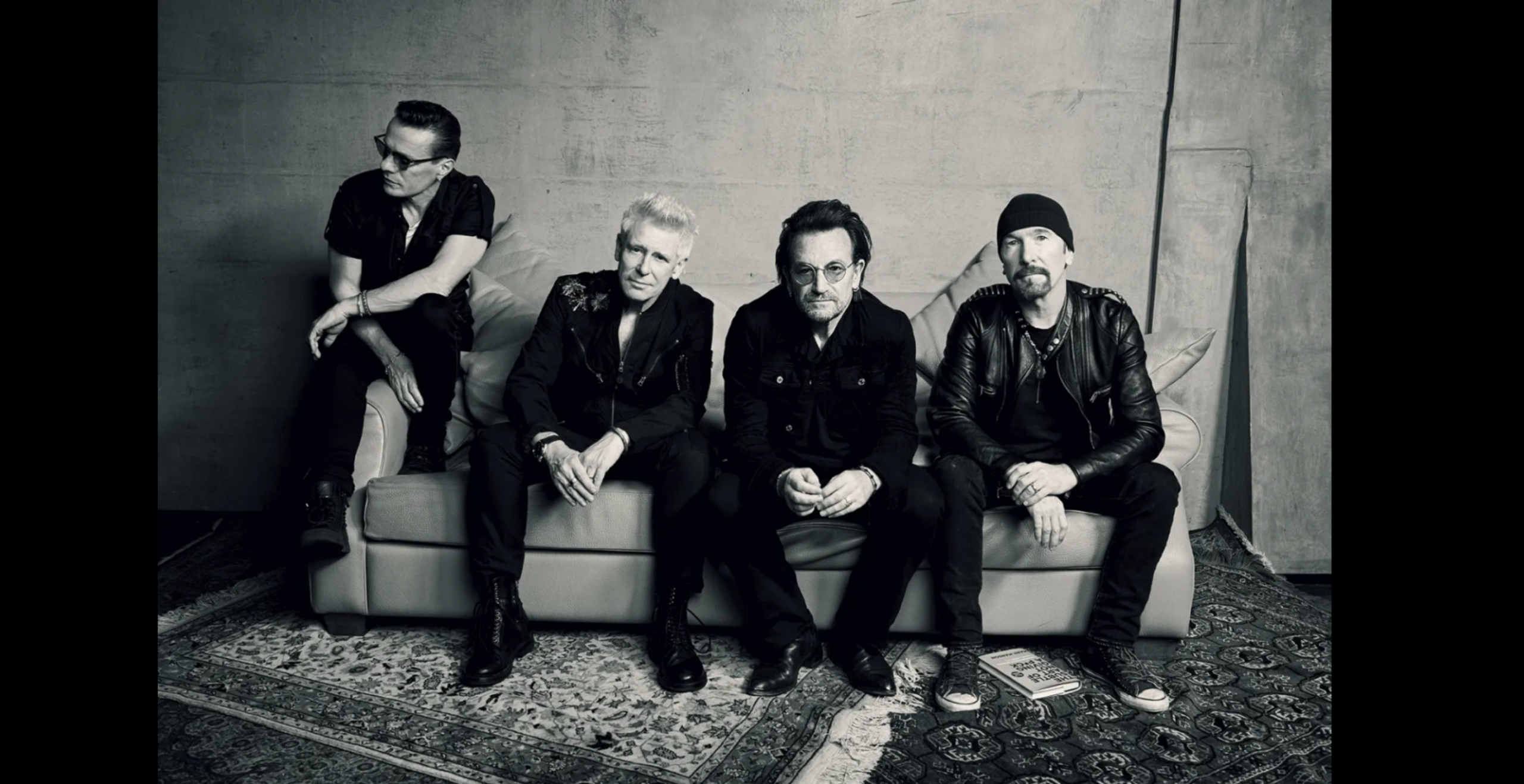
U2 released their first album in 1980. More than forty years later, they are still performing to sold out arenas, still releasing music, and still operating as the same core group. In an industry defined by fragmentation, reinvention, and the rapid obsolescence of almost everything, that kind of continuity is almost without precedent.
What is easy to overlook is the context in which that continuity happened. The music industry did not stay still around them. Physical albums gave way to digital downloads. Piracy reshaped revenue models. Streaming restructured how artists earn and how audiences discover music. Live performance became the primary economic engine for major acts, requiring an entirely different operational scale. Through each of those transitions, U2 did not simply survive. They remained relevant, continued to grow their reach, and stayed intact as a team.
Their longevity is not a story about talent. It is a story about how a group of people continued to make consequential decisions together across four decades of disruption.
When Adaptation Pulls Teams Apart
The conventional story about organizational resilience focuses on individual capability. We hire people who thrive in ambiguity, build training programs around personal adaptability, and celebrate leaders who stay calm under pressure and reinvent their roles as conditions shift.
This framing is not wrong, but it is incomplete.
What tends to break down under sustained pressure is not individual capability but collective coherence. As change accelerates, the conditions that once supported shared direction slowly erode. Priorities diverge. Decisions get made closer to the problem, without the broader context that would connect them to what others are doing. Teams that were once tightly coordinated begin operating as a collection of individuals each solving for their own piece.
This dynamic rarely announces itself. It surfaces gradually, through slower execution, recurring misalignment, and decisions that made sense locally but created friction across functions. By the time it becomes visible, it has usually been building for some time.
What Cohesion Under Pressure Actually Requires
U2’s continuity across industry shifts points to something specific: they did not treat adaptation as an individual exercise. Every major transition required the band to re-examine shared priorities, renegotiate creative direction, and recommit to how they would operate together going forward. The adaptation was collective, not parallel.
For organizations, this distinction matters more than it might appear. Teams that adapt individually tend to diverge. Each person or function recalibrates based on the information and pressures most visible to them. Without a mechanism to realign around shared priorities, those individual recalibrations accumulate into fragmentation.
Sustained cohesion requires structured moments where teams can:
- Surface what has shifted and what no longer holds.
- Clarify what matters most given current conditions.
- Resolve tradeoffs without reopening every prior agreement.
- Recommit to how they will move forward together.
These are not culture conversations — they are operating discipline.
The Longevity Advantage
Organizations that build this capacity gain something that compounds over time. Every time conditions shift, and in the current environment, they shift constantly — teams with strong alignment mechanisms recalibrate faster. They lose less ground during transitions. They spend less time recovering from misalignment and more time executing on what they have agreed matters.
The bands that fragment under pressure are not usually lacking talent but rather a shared operating structure that can hold under the weight of change. The same is true of teams.
U2’s forty years offer a clear illustration of what the alternative looks like. Relevance was not accidental. Cohesion was not a byproduct of chemistry. It was the result of continuing to make decisions together adapting the what while preserving the how.
That is the capability most organizations need to build. Not just the ability to change, but the ability to change together, and keep moving.